sansevieria jade hahnii Shop 'Sansevieria hahnii Black Jade' Care & Growing Guide
SKU: 56528906384
sansevieria jade hahnii

sansevieria jade hahnii Shop 'Sansevieria hahnii Black Jade' Care & Growing Guide

Sale price$24.27 Regular price$26.97
Save 10%

Pay in installments of $6.74 with ShopPay, AfterPay and Klarna

Shipping Estimate
USA
  • USA
  • CAN

Ships within 48 hours · Estimated delivery Jul 2 - Jul 7

Promo Codes Available:

For Your Every Summer RSVP, with Code: SUMMER15

Description

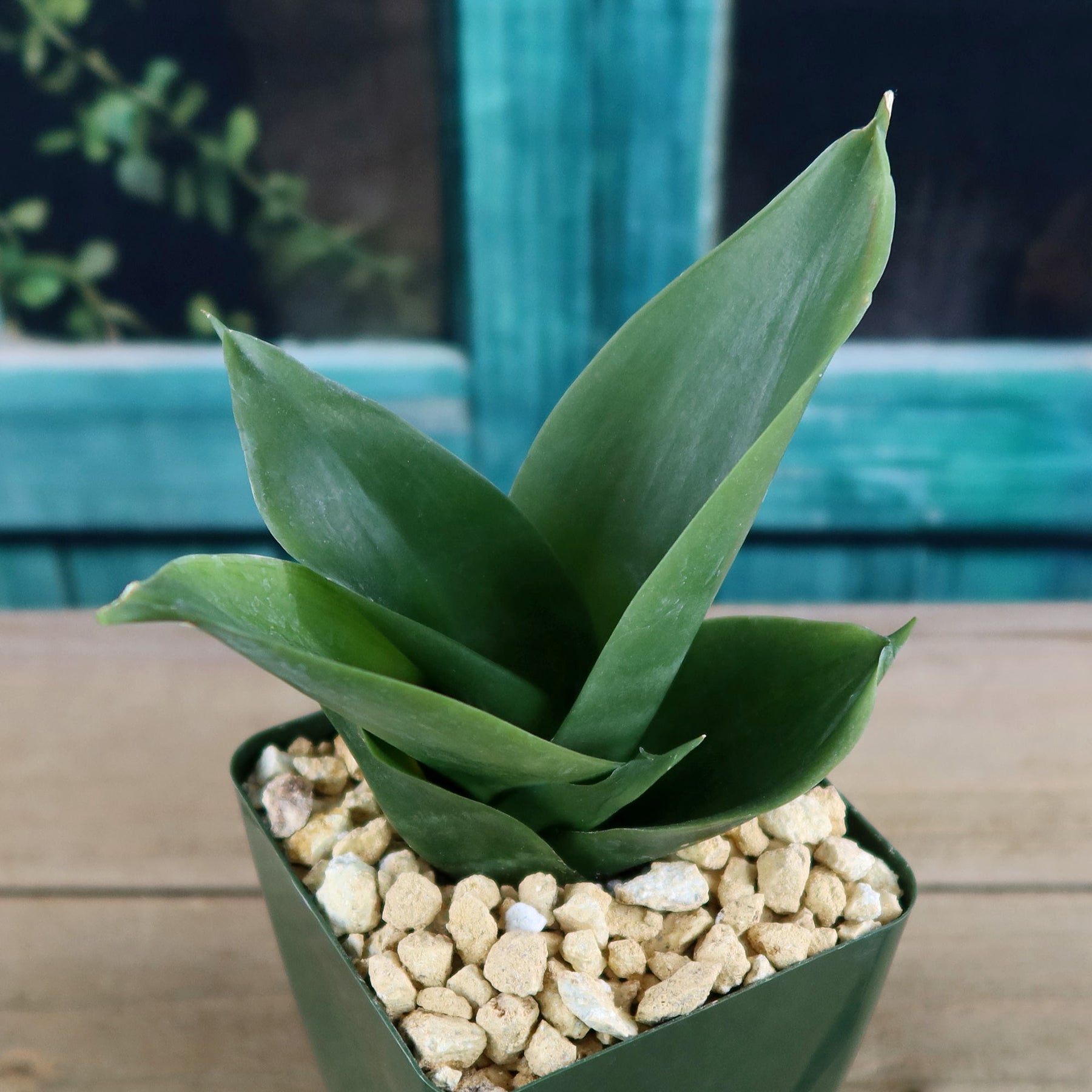
sansevieria jade hahnii Shop 'Sansevieria hahnii Black Jade' Care & Growing GuideThe Black Jade Snake Plant, botanically known as Sansevieria hahnii Black Jade (and recently reclassified as Dracaena trifasciata 'Black Jade'), is one of the most resilient and low maintenance dwarf houseplants in the world, prized for its deep, solid forest green leaves that appear almost black. It stores water in its thick, upright leaves, giving it impressive drought tolerance and allowing it to thrive with minimal attention. The cultivar name

The Black Jade Snake Plant, botanically known as Sansevieria hahnii ‘Black Jade’ (and recently reclassified as Dracaena trifasciata 'Black Jade'), is one of the most resilient and low-maintenance dwarf houseplants in the world, prized for its deep, solid forest-green leaves that appear almost black. It stores water in its thick, upright leaves, giving it impressive drought tolerance and allowing it to thrive with minimal attention.  

The cultivar name ‘Black Jade’ refers to its unusually deep green to nearly black foliage, which gives it a richer, more dramatic appearance than standard green snake plants. 

This evergreen succulent is especially loved by indoor plant enthusiasts because it combines bold architectural beauty with an extremely low-maintenance nature, making it one of the best beginner-friendly houseplants available. 

Its compact size makes it perfect for desktops, shelves, bedrooms, and offices, where it adds a sleek, modern touch to any indoor space. 

Native to West Africa, the Black Jade snake plant is characterized by its dense, bird’s nest-shaped rosette, formed by thick, broad, sword-like leaves that grow in a tight circular pattern.

The leaves are glossy, upright, and slightly cupped, with deep emerald to nearly black coloring and subtle darker banding.  

This compact, sculptural growth habit gives it a bold architectural presence year-round. Because it is highly adaptable, it can adjust to a wide range of indoor positions, though leaves that begin to lose their deep coloration or stretch unnaturally outward often signal a need for slightly better lighting. 

Unlike taller snake plant varieties, Sansevieria hahnii ‘Black Jade’ stays beautifully compact, typically reaching only 12 inches tall and 12 inches wide at maturity. Its slow-growing nature makes it ideal for small spaces, tabletop displays, terrariums, and decorative containers, where it remains neat and manageable for years. 

Related Product

The black jade blooms are rare indoors but may appear as slender upright stalks bearing clusters of small creamy-white to pale green fragrant flowers. These delicate blossoms are subtle but attractive and usually appear only on mature, well-established plants. 

When and How to Water Your Black Jade Snake Plant 

This snake plant prefers its soil to dry out completely between waterings and is far more drought-tolerant than most common houseplants due to its specialized water-storing leaves and rhizomes. While its underground root system easily stores moisture, making it highly forgiving if you miss several waterings in a row, it is extremely sensitive to overwatering, and soggy soil will quickly lead to mushy root or rhizome rot. 

The Sansevieria hahnii ‘Black Jade’ should typically be watered every 2–3 weeks during the active growing season (March–September) and dropped back to every 4–5 weeks during the dormant season (October–February), adjusting as needed based on your indoor temperature, potting size, and seasonal soil dryness. 

During the Active Growing Season, water your plant only when the potting soil is 100% dry all the way to the bottom of the container. When watering, soak the substrate thoroughly until water drains freely from the baseline holes, then immediately discard any excess water collected in the saucer. Warm temperatures and active growth mean the plant will use moisture efficiently during this period. 

During the Dormant Season, significantly reduce your watering frequency, as growth slows down or stops completely. Allow the soil to sit completely dry for a week or two before offering a light watering, as excess winter moisture combined with cooler air is the primary cause of plant failure. 

Pro Care Tip: Snake plants are highly susceptible to crown rot. When watering a plant, always pour water directly onto the surrounding soil rather than splashing it into the center of the leaf rosette. Water trapped inside the cup-like center cannot easily evaporate indoors and will quickly cause the core leaves to turn soft, mushy, and decay.

Light Requirements – Where to Place Your Dwarf Snake Plant 

When growing indoors, place your snake plant in bright, indirect light for at least 6–8 hours daily to maintain its strong growth, deep uniform color, and compact rosette form.

A west- or east-facing window, or a few feet back from a bright south-facing window with filtered light, works beautifully.

However, it also adapts seamlessly to low-light corners, dark bedrooms, or windowless offices lit by fluorescent bulbs, making it one of the most versatile indoor plants available. Avoid direct afternoon sunlight, as it can scorch the foliage and fade the deep jade tones. 

Like many rosetting succulents, this plant may slowly shift its leaves toward the strongest light source over time. Rotate the pot a quarter-turn every 2 weeks to encourage perfectly even, symmetrical growth and prevent the rosette from leaning. If the center leaves begin stretching upward dramatically and losing their compact shape, it is an early sign that the plant needs to be moved to a brighter spot. 

When grown outdoors, this tropical succulent performs best in partial shade to bright filtered shade in warm, frost-free climates. Place it on a covered patio, shaded porch, or beneath a garden canopy where it receives no intense, direct afternoon sun. Even brief exposure to harsh, unshielded summer sunlight can permanently burn its fleshy foliage and scar the smooth leaf surfaces. 

Optimal Soil & Fertilizer Needs 

The Sansevieria hahnii plant favors an incredibly loose, highly aerated, and chunky succulent potting mix. Planting them in ordinary dense garden soil or standard moisture-retentive indoor mixes will trap water around the roots, resulting in stunted growth and root rot. Instead, make or buy a well-draining potting mix, or ideally use our specialized succulent potting mix that contains 5 natural substrates and mycorrhizae to promote the development of a strong root system that helps your succulent plant to thrive.  

When it comes to feeding, this low-maintenance succulent requires very little nutrition. Apply a balanced, liquid NPK fertilizer diluted to half-strength once a year in early spring to stimulate fresh seasonal growth. Avoid feeding entirely during the fall and winter dormancy months, as unused nutrients will accumulate in the dry soil and cause severe root burn. 

Hardiness Zone & More 

In the United States, the Black Jade Snake Plant is primarily grown as an indoor houseplant, but in frost-free tropical and subtropical regions such as southern Florida, southern California, or Hawaii, it can be grown outdoors year-round in USDA Hardiness Zones 10-12. 

Outdoors, it performs best in bright shade, rock gardens, or xeriscapes where the delicate foliage is protected from direct afternoon sun exposure.

It thrives in warm environments with excellent airflow, which helps any accidental leaf moisture dry quickly. Frost and freezing temperatures will instantly kill this succulent. 

How to Grow Indoors as a Houseplant 

  1. Keep temperatures between 65°F and 85°F for optimal growth.
  2. Never expose it to temperatures below 50°F, as cold drafts and freezing conditions can damage the leaves.
  3. Place in bright, indirect light, though it can also tolerate lower-light conditions.
  4. Place indoor with a humidity between 30–40%.
  5. Keep away from cold drafts, open winter windows, and direct air-conditioning vents.

Wildlife – Sansevieria hahnii Flowers Attract the Following Friendly Pollinators 

This black jade snake plant can occasionally produce a slender flower stalk adorned with small, greenish-white flowers when highly mature, though flowering is exceptionally rare indoors. In outdoor tropical environments, its nighttime-blooming, nectar-rich flowers attract minor pollinators such as small moths, nocturnal bees, hummingbirds, and butterflies, which naturally assist with pollination in their native habitat. 

Butterflies
Bees
Hummingbirds
Lady Bugs
Multi Pollinators
Other Birds

According to the ASPCA, the Sansevieria hahnii plant is mildly toxic to cats, dogs, and humans if ingested due to naturally occurring chemical compounds called saponins found throughout the leaf tissue. While ingestion is rarely life-threatening, it can cause mild gastrointestinal upset, oral irritation, drooling, nausea, vomiting, and diarrhea. Keep it safely styled on higher shelves away from curious pets. 

How to Propagate Your Snake Plant 

This succulent can be easily propagated through leaf cuttings or rhizome division, with division being the preferred method to maintain the exact genetic clone of the parent plant.

  1. Rhizome Division (Recommended): Mature rosettes naturally produce small underground runners that sprout into baby plant offsets, commonly called "pups." During spring repotting, gently remove the plant from its container. Use clean hands or sterile pruning shears to snip the thick connecting rhizome between the mother plant and the pup. Plant the pup into its own small container with fresh, dry succulent soil.
  2. Leaf Cuttings: Cleanly cut a healthy leaf from the base. Let the cut end callus over for 2 to 3 days in a dry area. Place the callused cutting directly into moist perlite or sandy soil, or suspend the bottom tip in a shallow container of water. Be patient; while leaf cuttings root easily, it can take several months for a new rosette to form from the base.

Potting and Repotting Your Sansevieria Plant 

This houseplant prefers being tightly root-bound and thrives when its root system fills its container, so avoid placing it in an oversized pot. Large amounts of empty soil hold onto water too long, which increases the risk of rot. Repot only every 2–3 years during spring, or whenever the roots begin physically cracking plastic grower pots or pushing the plant upward out of the soil. 

Always choose a container with excellent drainage holes (terracotta pots are highly recommended as they allow the soil to breathe), and move up only one pot size at a time using a loose, sandy cactus mix. No watering is required for the first week after repotting to allow any microscopic root tears to heal safely.

Key Takeaways

  1. The Black Jade Snake Plant is a highly popular compact houseplant prized for its dramatic, near-black foliage and sculptural bird’s nest shape, making it a perfect statement plant for desks, shelves, and modern interiors.
  2. This drought-tolerant succulent stores water in its thick leaves, allowing it to survive extended dry periods and making it one of the most forgiving indoor plants for beginners, travelers, and busy plant owners.
  3. Its rich dark foliage remains attractive year-round and adapts well to both bright indirect light and lower indoor light, where many other houseplants struggle to maintain healthy growth.
  4. This low-maintenance indoor plant naturally helps improve indoor spaces by filtering airborne toxins and releasing oxygen, making it a functional as well as decorative addition to homes and offices.
  5. The Snake Plant slowly produces baby offsets, or “pups,” around its base over time, allowing gardeners to easily propagate and create new plants from one mature specimen.

The Bottom Line 

Overall, the Black Jade Snake Plant (Sansevieria hahnii 'Black Jade') stands as one of the most reliable, striking, and visually architectural plants you can introduce to an indoor plant collection. Its deep, near-black forest green hue, smooth leather texture, and compact rosette form bring an immediate air of clean elegance and calm structure to any home or office space. While it appreciates occasional bright indirect light and warm temperatures, its legendary ability to withstand low light and missed waterings makes it an effortless investment. Order your very own premium Black Jade Snake Plant for sale today!
Shipping Notes
  • Free Standard Shipping on $100+ Orders to the USA.
  • Except Preorder products are shipped in 48 hours.
  • Delivery to the USA:
  1. Standard Shipping : 3-10 business days
  • If time is of the essence, please consider selecting expedited delivery for faster service.
Exchange/Return Notes
  • We offer a 30-day return/exchange service after receiving.
  • Final sale items are not eligible for returns or exchanges.
  • To process your return/exchange, please contact us at [email protected]
  • Please click here for more details>>> Return & Exchange Policy
SKU: 56528906384

Discover Niche Categories That Outsell sansevieria jade hahnii

Top-Converting Item to Boost Your Average Order

4.7 ★★★★★
Based on 744 reviews
Sort
Highest Rating
Newest First
Oldest First
Product Reviews
M
Verified Purchase
MJ
Whiting, US
★★★★★ 5
Nicest Bed Pillow Protectors I have found!
Size: Body
I have ordered these pillow protector cases multiple times for pillows that are extra thick or lofted as these seem to be very comfortable, durable, and really protect the pillow itself! They wash up well if there is any sort of stain. Nice bed pillows can be a real investment…it’s both easier to wash these protectors with my bed linens and more sanitary overall. Thin pillow protectors either wrinkle or fail to actually protect the pillow itself from whatever…dust mites, head lice, sweat, make up, skin care, spit up….be sure to follow the instructions for laundering and drying them and they will last a long time! My experience is these protectors keep my pillows from getting lumpy or bunching up, so promote a better night’s sleep!
WAS THIS REVIEW HELPFUL?YesReportShare
Reviewed in the United States on March 30, 2026
T
Verified Purchase
Tim
Carnegie, US
★★★★★ 5
This is definitely not your average pillow protector!
You have to see and feel this pillow protector to understand just how good it is (photos and videos just don't do it justice). It looks and feels like some sort of fancy premium luxury pillow case, but it's a zippered pillow protector! I always thought pillow protectors were just a simple white cotton zippered pillow case in order to add another layer in addition to the pillow case, but this pillow protector from COOP Home Goods completely blows me away. I just kept going, "Omg, are you kidding me? This is just a pillow protector?! Wow!" The only negative is, the zippered opening is too small. When I tried to put my brand new COOP pillow into it (I have the pillow that has approximately 15,000 reviews), it was very difficult. This was before I removed any of the filling for customization though, which I still needed to do. I finally got around to doing that and I probably removed about 1/3rd of the filling because I'm mostly a stomach sleeper, so I'm sure the pillow protector will be much easier to put on the next time I remove it, but I'm not going to remove it until I have to wash it because I don't want to be stuck trying to put it back on again! That's how annoying it was to put on. I'm keeping it though because I'm hoping it will mean I'll never have to wash the pillowcase or especially the pillow! That'd be awesome. I recently upgraded from a MyPillow Premium and I hated washing it (it was always a mini project, so I am hoping to be completely done with that). I contacted COOP about the small opening and they said, "We do have plans to change the zipper placement on our pillow protectors, however, production has not started and we do not have a firm date to provide you with at this time." They also reminded me that the pillow can be "bent and manipulated" (their words) into the pillow protector. See next paragraph though to understand why I didn't want to handle the pillow too much, otherwise I would've just done that instinctively. There is one more negative aspect that's worth mentioning, but it's due to a personal issue (there's nothing COOP can do about it). I have rough dry skin on my hands, and the material (40% Bamboo-derived Viscose Rayon, 60% Polyester) is rather 'catchy' on my hands. If you have rough dry skin and if you've ever tried to handle something made out of silk, you know what I'm talking about; you can't enjoy the silky smooth texture. This isn't anywhere near as bad as silk, but it's just bad enough that it's worth mentioning. I think it's due to the Bamboo-derived Viscose Rayon. The pillows are the same way for me due to the pillow case. That's probably what made the pillow case so difficult to put on because I was trying to be very careful not to get my skin flakes all over everything from just "manhandling" it, which is what I should've done and then just vacuumed it clean. heh I won't use lotion though because I don't like the idea of getting lotion on everything I touch every day, and it makes my hands sweat much easier - especially in the summer. So, I prefer to just deal with clean but rough dry hands. I guess another negative thing could be that it's not possible to just buy 1 pillow protector. These are 2-packs. I only needed 1 pillow protector and I only wanted 1. I would've gladly paid $15 for just 1. So anyway, beyond that, these pillow protectors truly have that "wow!" factor. They're exactly as advertised and more (because some things are only possible to know about by experiencing them for yourself).
WAS THIS REVIEW HELPFUL?YesReportShare
Reviewed in the United States on March 15, 2018
I
Verified Purchase
Ihave6kids
Pawtucket, US
★★★★★ 5
Best pillow protector ive ever used!
Size: Body
I was afraid this pillow protector would inflate with air like every other pillow protector I've ever used (from super cheap to super not cheap). Man was I wrong! You can't even tell it's on the pillow and it doesn't take away from the squishy goodness of the pillow. I love these body pillow protectors so much I've ordered 5 so I'm never without! I also use their regular sized pillow protectors and it's the same exceptional quality. Coop home Good's outdid themselves with this one and I couldn't be happier. Body pillows are expensive and this is a good way for me to protect my investment without sacrificing any comfort! LOVE IT! UPDATE: I've been using these for a few months now and they're just as soft now as the day I put them on. But I have finally given in to the fact that they're a tad troublesome getting on and off. When I first got them I washed them often and line dried (these take a long time to dry, you have to flip them inside out over and over to get them fully dried because the inside will hold the water from the washing machine). However over time I've found myself washing them less frequently because it takes all day to get them dry but also because I'm always nervous the zipper will break during put ons and take offs. You are supposed to squish your pillow into and out of the opening which obviously is very possible but there's no way to avoid putting stress on the zipper opening during this process. Another thing about these protectors is that the greyish strip along the sides is NOT water proof. So everytime I do take the protectors off i find new stains along the sides where the pillow had no protection. And I could be wrong but I think the non-water proof gusseted sides are an essential to the extreme comfort of these protectors so I can't be too picky (otherwise I believe these would inflate with air anytime pressure is applied). If I didn't have young children I probably would've never even realized the sides aren't waterproof. I would still take the coop Home Good's pillow protector with non water proof gusseted sides over the average pillow protector ANY DAY.
WAS THIS REVIEW HELPFUL?YesReportShare
Reviewed in the United States on May 15, 2018
S
Verified Purchase
Stephenochi
Whiting, US
★★★★★ 5
Good pillow protector
Size: Queen Size (Pack of 2)
Looks and feels very durable. Didn't notice and odor when opened or in use. Fits my Coop Home Goods pillow perfectly! Sleep quality is still good with these covers on.
WAS THIS REVIEW HELPFUL?YesReportShare
Reviewed in the United States on March 29, 2026
M
Verified Purchase
MeMe🦋
Louisville, US
★★★★★ 4
Very nice but expensive
Size: Queen Size (Pack of 2)
I love these cases, they didn't let out as much air as I had hoped for out the sides so I only zip it up half way so my pillow stays squishy and moldable and not partially filled with air which changes the feel of your pillow. Other then that they are great, they are very soft and quite, there is no noise whatsoever and there is some thickness to it adding a little more softness to your pillow. I ended up buying a second set. I just wish it had a little more airflow through the sides so I didn't have to leave it unzipped, that kind of defeats the purpose. I also think they are a little more expensive then they should be.
WAS THIS REVIEW HELPFUL?YesReportShare
Reviewed in the United States on February 2, 2026

recommand products