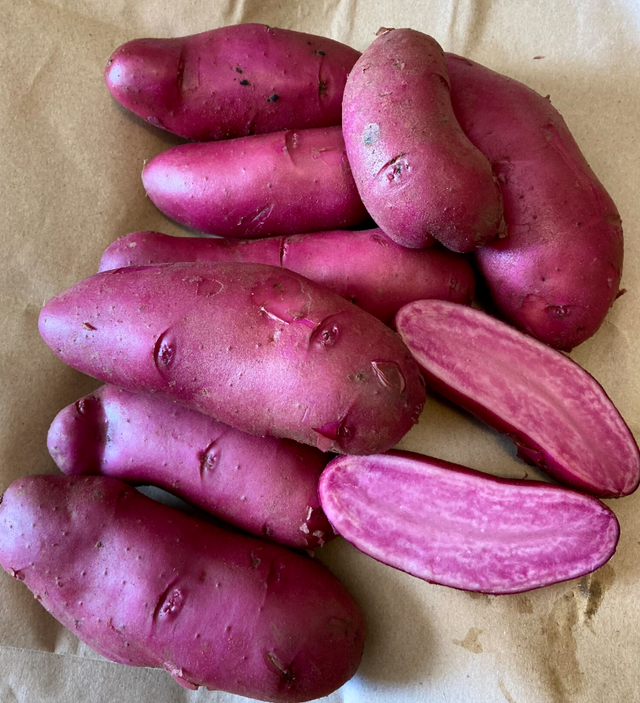
mayan rose seed potatoes Seed Potato, Ama Rosa, Organic
SKU: 77257513777
mayan rose seed potatoes

mayan rose seed potatoes Seed Potato, Ama Rosa, Organic

Sale price$19.46 Regular price$21.62
Save 10%

Pay in installments of $5.41 with ShopPay, AfterPay and Klarna

Shipping Estimate
USA
  • USA
  • CAN

Ships within 48 hours · Estimated delivery Jul 5 - Jul 10

Promo Codes Available:

For Your Every Summer RSVP, with Code: SUMMER15

Description

mayan rose seed potatoes Seed Potato, Ama Rosa, OrganicAmarosa Seed Potato (Solanum tuberosum 'Amarosa') Amarosa is a stunning fingerling potato variety with smooth red skin and vibrant rose colored flesh. This mid season beauty is prized for its creamy texture, sweet, nutty flavor, and unique appearance. Ideal for roasting, steaming, frying, or salads, Amarosa holds its striking color even after cooking, making it a favorite for gourmet dishes. With strong disease resistance and high yields, Amarosa is

Amarosa Seed Potato (Solanum tuberosum 'Amarosa')

Amarosa is a stunning fingerling potato variety with smooth red skin and vibrant rose-colored flesh. This mid-season beauty is prized for its creamy texture, sweet, nutty flavor, and unique appearance. Ideal for roasting, steaming, frying, or salads, Amarosa holds its striking color even after cooking, making it a favorite for gourmet dishes. With strong disease resistance and high yields, Amarosa is an excellent choice for home gardeners and chefs seeking a reliable, colorful, and flavorful crop.

Key Characteristics

Mid-Season Variety
Amarosa matures in 85-95 days, offering a dependable mid-season harvest. Its high productivity ensures plenty of fingerling potatoes to enjoy fresh or store for later use.

Brilliant Color and Gourmet Flavor
Amarosa is loved for its smooth red skin and vibrant rose-pink flesh that stays vivid even after cooking. Its creamy texture and sweet, nutty flavor make it perfect for roasting, frying, or as a stunning addition to potato salads.

Disease Resistance
Amarosa has natural resistance to scab and other common potato diseases. This resilience ensures healthier plants and high-quality tubers, making it a great choice for organic and low-spray gardening systems.

Bloom Time and Soil Preferences
Amarosa plants bloom in June and July, producing delicate white to light pink flowers. They thrive in loose, well-draining soils rich in organic matter. Consistent moisture is essential for optimal growth, but care should be taken to avoid overwatering or waterlogged soil.

Tips for Best Growing
Plant Amarosa seed potatoes 4-6 inches deep in fertile, loose soil after the risk of frost has passed. Space pieces 12 inches apart in rows 2-3 feet apart. Hill soil around plants as they grow to encourage tuber formation, and water consistently during dry periods. Harvest when the vines yellow and die back, and cure tubers in a cool, dark place for 1-2 weeks to enhance their flavor and storage life.

Product Details

  • Native Range: Cultivated crop; not a native plant.
  • Plant Life Cycle: Annual.
  • Sun Requirements: Full sun (6+ hours daily).
  • Soil Requirements: Loose, well-draining soil; medium moisture; rich in organic matter.
  • Mature Height: 12-18 inches.
  • Harvest Timing: Mid-season, 85-95 days after planting.
  • Bloom Time: June to July.
  • Bloom Color: White to light pink.
  • Tuber Color: Smooth red skin with rose-pink flesh.
  • Disease Resistance: Strong resistance to scab and other common potato diseases.
  • USDA Hardiness Zones: Grown as an annual in all zones.
  • Planting Notes: Cut seed potatoes into pieces with at least one "eye" each; plant 4-6 inches deep, spaced 12 inches apart. Hill soil around plants as they grow for maximum yields.

Amarosa seed potatoes are an exceptional choice for gardeners and gourmet cooks alike, offering vibrant, rose-colored tubers with delicious flavor and creamy texture. Their disease resistance and high yields make them a reliable, show-stopping addition to any garden.Learn more about growing potatoes in our Ultimate Potato Growing Guide!

Shipping Notes
  • Free Standard Shipping on $100+ Orders to the USA.
  • Except Preorder products are shipped in 48 hours.
  • Delivery to the USA:
  1. Standard Shipping : 3-10 business days
  • If time is of the essence, please consider selecting expedited delivery for faster service.
Exchange/Return Notes
  • We offer a 30-day return/exchange service after receiving.
  • Final sale items are not eligible for returns or exchanges.
  • To process your return/exchange, please contact us at [email protected]
  • Please click here for more details>>> Return & Exchange Policy
SKU: 77257513777

Discover Niche Categories That Outsell mayan rose seed potatoes

Top-Converting Item to Boost Your Average Order

4.1 ★★★★★
Based on 1235 reviews
Sort
Highest Rating
Newest First
Oldest First
Product Reviews
J
Jimmy R. Reagan
Fort Morgan, US
★★★★★ 5
Great, New Commentary!
Format: Hardcover
This commentary by Robert Yarbrough will become, I predict, a top-rated volume on the Pastoral Epistles. These epistles are ideal for the style of commentary we find in the Pillar New Testament Commentary (PNTC) series. As respected and valuable as the NICNT volumes by the same publisher are, these Pillar volumes are simply more valuable. They have a better center of focus, are more consistently conservative, and have more value for pastors without sacrificing scholarship. This volume succeeds in reaching that standard too. As you might have guessed, the editorship of D. A. Carson likely keeps this series moored to that lofty perch. BTW, don’t miss the editor’s preface where Carson fawns over Yarbrough’s work here. I was in love with this commentary within a few pages of its fine Introduction. So many commentators lose their way in the Pastoral Epistles. I have long suspected that it has far more to do with the authors dislike of what these epistles say rather than any actual problem found within them. Yarbrough is not sucked into the irrational fear of using the term “pastoral epistles” as so many are today either. It’s a breath of fresh air. He opens the Introduction with eight theses on pastoral heritage in these epistles. To my mind, that was a great way to present introductory issues. Next, he does a section each on Father, Son, and Spirit respectively in the Pastoral Epistles (PE). He was particularly perceptive in discussing Paul as a working pastor, even dispensing some silly critical theories along the way. He then tackles in turn geography, people, and key terms. He ends with a section on authorship and other usual introductory matters and masterfully reaches conservative conclusions. The commentary itself was even better! The phrase “real help” comes to mind. He showed off his skill, for example, in the perpetual battlefield of Titus 2. He gently yet surefootedly takes us where that disliked passage goes. He’s kind to dissenters, careful in scholarship, but not afraid to reach a conclusion. I don’t know about you, but that’s how I like my commentaries. 5 stars all the way!
WAS THIS REVIEW HELPFUL?YesReportShare
Reviewed in the United States on October 11, 2018
K
Verified Purchase
Kathya1010
Battle Creek, US
★★★★★ 4
A Thorough Commentary that Needs Less Neutrality
Format: Kindle
Dr. Yarbrough has addressed the meaning of the Pastoral Epistles with the excellence we have have come to expect from him. However, sometimes he seems reluctant to take a stand on some controversial issues (other than on Pauline authorship and matters of basic Christian orthodoxy, to both of which he is correctly firmly committed). When several possibilities of meaning are possible, for example, it would be helpful to know which hypothesis he favors, and why. While occasionally he does state a definitive opinion, more often he does not, perhaps in a laudable but somewhat overdone effort to avoid controversy with fellow theologians. However, when one reads a 1000+ page commentary written at a scholarly level, one expects the author to give his or her expert opinion on such matters—indeed, it is a major reason that one purchases and studies a commentary. To conclude on a more positive note, Dr. Yarbrough’s observations on Greek word usage, including numerous Old Testament passages from the Septuagint, the Apostolic Fathers and apocryphal works, were very helpful in aiding the reader in understanding fine shades of meaning. His pastoral observations and deductions based on the text are simply excellent. His discussions of the strengths and weaknesses commonly encountered in Christian leaders in Western countries versus those observed in leaders from other nations were fascinating and edifying, not to mention occasionally convicting (in a good way)—even for readers who aren’t pastors, like me.
WAS THIS REVIEW HELPFUL?YesReportShare
Reviewed in the United States on November 25, 2025
N
Verified Purchase
Nicholas Quient
West Palm Beach, US
★★★★★ 1
Unimpressive
Format: Hardcover
Concerning various controversial questions of like Pauline authorship and women in ministry, Yarbrough's commentary is lackluster, polemical, and altogether dismissive of large swaths of evangelical scholarship that run counter to his claims. There are better commentaries from an evangelical perspective (I. Howard Marshall, Philip Towner) that seriously address such questions without resorting to hand-waving. Overall, an unimpressive and polemical work that is superseded by better words.
WAS THIS REVIEW HELPFUL?YesReportShare
Reviewed in the United States on September 10, 2019
K
Verified Purchase
Kailey Goodman
Whiting, US
★★★★★ 5
Great for NP school
Format: Paperback
This is very informative and easy to read! No fluff but just the nitty gritty of what you need to know
WAS THIS REVIEW HELPFUL?YesReportShare
Reviewed in the United States on May 13, 2025
R
Verified Purchase
Ryan Michael Skinner
Louisville, US
★★★★★ 5
Good
Format: Paperback
Good
WAS THIS REVIEW HELPFUL?YesReportShare
Reviewed in the United States on August 4, 2025

recommand products